

A fascinating morning at the Innovation Qualcomm event today. A lot of what the company does is under the bonnet of Smartphones, Netbooks and the new breed of Smartbooks in the shape of chips, processors and cellular connectivity devices. The company also developed the BREW platform, wihch, as Andrew Gilbert, EVP & President, Qualcomm Internet Services & Europe, pointed out, has so far delivered over 2 billion paid-for mobile applications, generating over $2 billion (£1.2 billion) of revenue to publishers and developers worldwide.
Among the exhibits being demonstrated today was a wireless health system. This included a heart rate monitor sitting in the Qualcomm guy’s shirt pocket and transmitting heart rate data to his phone. In the near future, we were told, the monitor will take the form of a smart patch, which looks pretty much like a regular plaster, but contains the circuitry necessary to collect and transmit the data. Freakier still were pills with built in, very low power radios, that will transmit data to a gateway, enabling a care provider to establish whether a patient had taken their medication. The pills will also contain whatever drug is needed to treat the patient’s illness; the radio is just an added extra. This system is being developed by a US firm called Proteus, in conjunction with Qualcomm, and while it may sound like something out of a movie, according to the guy doing the demo, it’s very close to being a commercial reality. I just hope that swallowing a radio, albeit a fairly low-powered one, four times a day for a week doesn’t bring on any side effects of its own.
The company also demonstrated an automatic emergency call system that will trigger a call to a Public Safety Answering Point (PSAP). The system is expected to be mandatory for all new cars within a couple of years. Then there’s Skifta, which enables you to access your media, such as music, photos and videos, from any DNLA-compliant (Digital Living Network Alliance) device, such as a TV for example. So if you’re round your friend's house and you don’t care for their music collection, you can listen to some of yours.
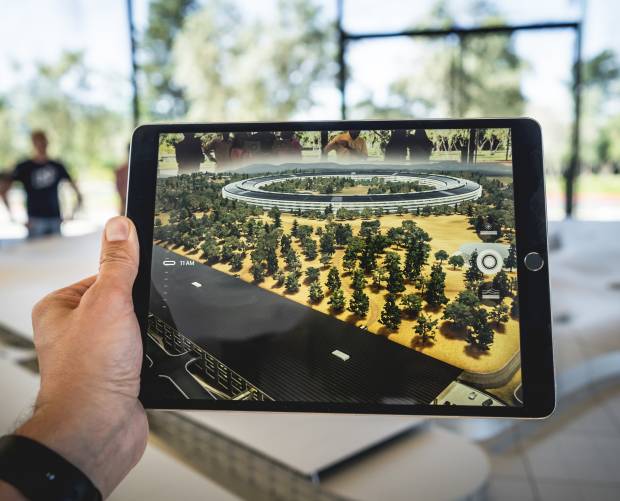
Another idea proposed at the event was an augmented reality (AR) app that would enable you to point your phone at someone and see whatever public, social networking-type information they were willing to share with strangers in this way. Another AR app, or possibly the same one, would pull up information and reviews about restaurants simply by pointing your phone at them. While some of this may sound a little fanciful, this last one, as anyone who followed our coverage of last year’s MWC will know, certainly isn’t. I had just such an app, the iPointer, demonstrated to me in the grounds of the Fira where the event takes place. In any event, if the future looks anything like Qualcomm’s vision of it, it’s going to be a blast.
David Murphy
Editor